NutriMill Classic Grain Mill Review – Amazing Features and Benefits Explained
Wiki Article
NutriMill Classic Grain Mill Review – Powerful Home Flour Milling
Introduction: Why Choose the NutriMill Classic Grain Mill?
Choosing a dependable electric grain mill can transform your baking routine, and the NutriMill Classic is designed to make home flour milling more convenient.
Equipped with a high-performance 1200W motor, this electric grain mill can grind compatible grains into fresh flour at impressive speeds.
Fresh grain milling allows bakers to explore different grain varieties and create customized flour blends.
Throughout this review, I'll explore the machine's grinding capabilities, design, technology, and suitability for home baking.
NutriMill Classic Motor Performance Explained
One of the most appealing features of the NutriMill Classic is its powerful 1200-watt motor.
Featuring a 10-amp, 1¾-horsepower motor, the machine delivers the power needed to process a wide variety of compatible dry grains.
With a stated maximum output of five cups per minute, this high speed grain mill can help reduce flour preparation time.
Whether you're baking bread for the family or experimenting with whole grain recipes, efficient grinding can save valuable preparation time.
However, actual output may vary depending on grain type, texture settings, and operating conditions.
Fine-to-Coarse Grinding Flexibility
One feature that makes this grain mill especially versatile is its ability to produce different flour textures.
Its stainless steel impact milling heads allow users to select fine, medium, or coarse flour settings.
The manufacturer reports that its grinding adjustment range is significantly wider than that of earlier impact mill designs.
This flexibility makes it easier to experiment with homemade flour blends and different baking styles.
If you want greater control over your freshly milled flour, adjustable grinding settings offer a click here practical advantage.
NutriMill Classic Design and Engineering
High-speed grain mills generate heat and noise, making airflow management an important design consideration.
NutriMill equips this machine with its proprietary Force Flow technology to support airflow and sound management.
NutriMill claims that its improved chamber technology delivers substantial noise reduction relative to previous models.
Better motor ventilation can contribute to more consistent operation during appropriate milling sessions.
Nevertheless, users should expect noticeable operating noise from a powerful impact grain mill.
Wide Grain Compatibility and Versatility
The ability to grind different ingredients makes this flour mill useful for a variety of homemade recipes.
According to NutriMill, supported ingredients include hard wheat, soft wheat, rice, spelt, rye, barley, millet, quinoa, buckwheat, and oat groats.
It can also process certain dry beans, lentils, split peas, dried corn, teff, amaranth, and other approved ingredients.
The broad selection of supported grains provides flexibility for traditional and creative baking recipes.
Importantly, oily, wet, or otherwise unsuitable ingredients should not be processed unless expressly approved by the manufacturer.
Understanding Fresh Flour Benefits
Many home bakers prefer grinding whole grains immediately before preparing dough.
The NutriMill Classic is designed to keep flour temperatures typically around 118 degrees Fahrenheit during milling.
The manufacturer promotes this temperature management as a way to help protect grain nutrients.
It's important to understand that flour temperature alone does not guarantee the preservation of every nutrient.
For bakers who appreciate whole grain ingredients, the ability to grind flour when needed can be especially attractive.
Included Components and Practical Features
The NutriMill Classic includes several accessories intended to improve everyday convenience.
The package includes an additional hopper extension along with an air filter and separator cup.
For users who frequently grind flour, the extended hopper capacity may reduce the need for repeated refilling.
The included accessories help support the machine's intended operation and maintenance.
Regular maintenance and correct assembly are important for dependable long-term performance.
NutriMill Classic Grain Mill Pros and Cons
Before choosing the NutriMill Classic, it's helpful to evaluate its advantages and limitations.
NutriMill Classic Benefits
Its strongest features are the 1200-watt motor, fast flour production, stainless steel milling heads, and broad grain compatibility.
Furthermore, the Force Flow chamber and grain hopper extension enhance the machine's overall appeal.
Another positive feature is the manufacturer's limited lifetime warranty.
Important Buying Considerations
As with other powerful impact mills, operating noise remains a consideration.
Additionally, not every grain, seed, or food ingredient is suitable for impact milling.
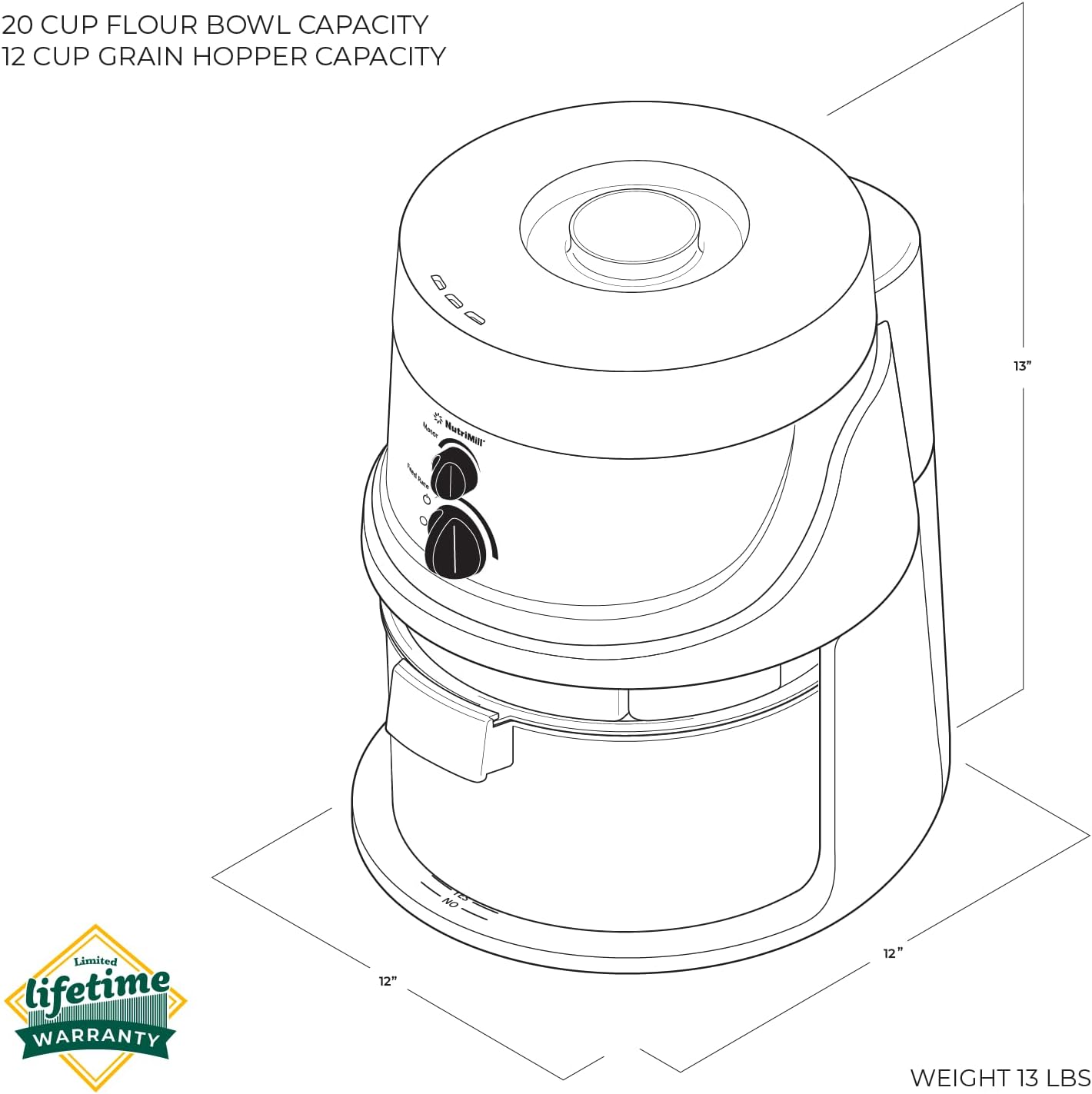
Finally, buyers should consider available counter space, cleaning requirements, and how frequently they expect to mill flour.
Is This Electric Grain Mill Right for You?
The NutriMill Classic is particularly appealing to home bakers who regularly prepare bread and whole grain recipes.
Its grinding speed can be valuable for preparing flour in larger quantities.
Beginners may appreciate its straightforward purpose, while experienced bakers may value its texture adjustments.
For anyone who rarely uses whole grain flour, a dedicated grain mill may be less essential.
Final Verdict: Is the NutriMill Classic Worth Buying?
For anyone researching electric grain mills, the NutriMill Classic deserves consideration because of its powerful motor and flexible grinding system.
Its 1200-watt motor, adjustable stainless steel milling heads, and maximum output of five cups per minute are notable strengths.
Additional benefits include the Force Flow chamber, grain hopper extension, and manufacturer-backed limited warranty.
If you frequently bake homemade bread or enjoy experimenting with fresh whole grain flour, this grain mill could be a worthwhile kitchen investment.
Ultimately, choosing the right grain mill depends on your budget, baking frequency, and preferred flour textures.
With its combination of power and versatility, this grain mill can become a useful part of a home baking routine.
Report this wiki page